
The Unique Anatomy of Long Island’s Post-War Housing Stock
Based right here in Levittown, Square One Professional Home Inspectors has inspected hundreds of post-war Capes, Ranches, and expanded Split-Levels across Nassau and western Suffolk County. Built rapidly between 1947 and the early 1960s, these homes have stood the test of time—and most have been expanded, dormered, or remodeled multiple times over the past 75 years.
Because of how these homes were originally engineered—and how later homeowners modified them—inspecting a Levittown-era property requires deep familiarity with specific systems that generic checklists miss.
1. In-Slab Copper Radiant Heating Coils & Thermal Imaging
Many original Levittown concrete slab homes were built with copper hot-water heating coils embedded directly inside the concrete slab. Over decades, soil acidity, slab movement, or careless flooring nails can pinhole these copper tubes, resulting in hidden water leaks and pressure drops in the boiler.
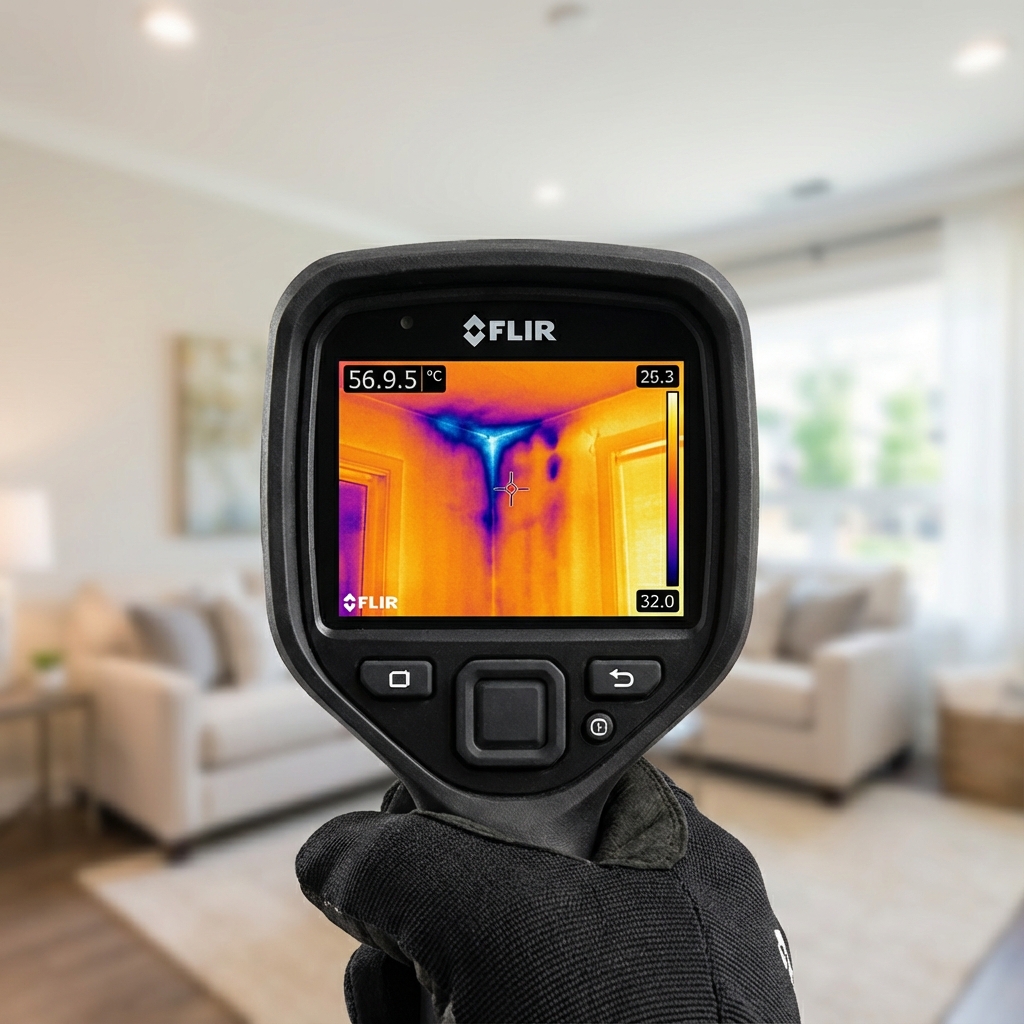
We combine boiler pressure/zone checks with high-resolution infrared thermal imaging cameras. Thermal imaging allows us to visualize the active radiant heating loops beneath the floor covering and spot abnormal thermal blooms that indicate a sub-slab leak or dead heating zone.
If radiant coils in the slab have failed or been abandoned, we verify whether baseboard convectors were properly sized and piped to heat the home evenly.
2. Underground & Above-Ground Heating Oil Tanks
Post-war homes were originally heated by fuel oil, often stored in buried underground steel tanks (USTs) or tucked into utility alcoves. Even if a home has since converted to natural gas, we carefully inspect the basement, utility room, and exterior foundation perimeter for abandoned copper oil fill/vent pipes or evidence of an unclosed buried tank.
We also inspect active above-ground oil tanks for bottom seam corrosion, unstable legs, and unprotected fuel supply lines.
3. Second-Story Dormers, Structural Load Paths & Electrical Upgrades
When a 1,000-square-foot Cape is expanded with a full rear dormer and a side addition, the structural load on the original first-floor framing and slab footing changes dramatically. We evaluate rafters, collar ties, header spans, and roof tie-ins to ensure additions were framed properly without sagging ridges or overloaded joists.

Written by Vinny Fundaro, CMI®
InterNACHI® Certified Master Inspector & NYC Licensed Operating Engineer • NYS License #16000066020
Want the full breakdown of what we inspect across Nassau, Suffolk, Queens, and Brooklyn? Read our Complete Long Island Home Inspection Pillar Guide, or explore our Termite & WDI Guide and Radon Testing Guide.
More Long Island Inspection Articles
7 Hidden Home Inspection Deal-Breakers in Long Island Homes (And How to Spot Them)
From concealed foundation settlement and Federal Pacific electrical panels to subterranean termite damage, learn which defects Long Island home buyers should never ignore before signing a contract.
Read ArticleDo You Really Need Radon & Termite Testing When Buying a Home in Long Island?
Many NY buyers wonder if add-on environmental and pest inspections are necessary. Here is what local data, EPA guidelines, and mortgage lenders require across Nassau, Suffolk, and NYC.
Read Article