1. What Is Radon Gas & Why Test Homes in Long Island & NY?
Radon is a naturally occurring radioactive gas created by the decay of uranium and radium in soil, rock, and glacial deposits beneath a home’s foundation. Because a house operates under slightly negative air pressure compared to the soil (known as the "stack effect," especially when heating or air conditioning systems run), radon gas is drawn upward into the home through:
- Hairline cracks in poured concrete basement slabs and foundation walls
- Hollow concrete block foundation cores and unsealed top courses
- Unsealed sump pump pits, floor drains, and dirt crawlspaces
- Expansion joints and utility pipe penetrations in slab-on-grade homes
Both the U.S. Environmental Protection Agency (EPA) and the U.S. Surgeon General recommend that all homes below the third floor be tested for radon during a real estate point-of-sale transaction, regardless of geographic radon zone designation. Two adjacent homes on the same street in Huntington, Great Neck, or Levittown can have vastly different indoor radon levels due to soil permeability and ventilation differences.
2. Understanding EPA Radon Action Levels (pCi/L)
Radon concentration in air is measured in picocuries per liter (pCi/L). Here is how the EPA categorizes test results during a home inspection:
| Radon Level (pCi/L) | Risk Classification | EPA Recommended Action | Typical NY Real Estate Negotiation |
|---|---|---|---|
| Below 2.0 pCi/L | Low / Normal Indoor Level | No action required; re-test every 2–5 years or after major renovations | Clear to proceed with transaction |
| 2.0 to 3.9 pCi/L | Moderate / Caution Range | EPA advises considering mitigation if levels can be lowered below 2.0 pCi/L | Seal sump pit / foundation cracks; re-test after seasonal HVAC changes |
| 4.0 pCi/L or Higher | Elevated — Action Level | Install an active radon mitigation system to reduce indoor concentration | Buyer requests seller-paid sub-slab depressurization system or closing credit ($1,200–$2,200) |
3. Continuous Radon Monitors (CRM) vs. Passive Charcoal Canisters
When hiring a home inspector for radon testing, the equipment used matters tremendously. Some inspectors leave behind inexpensive mail-in charcoal canisters that must be shipped to an out-of-state lab.
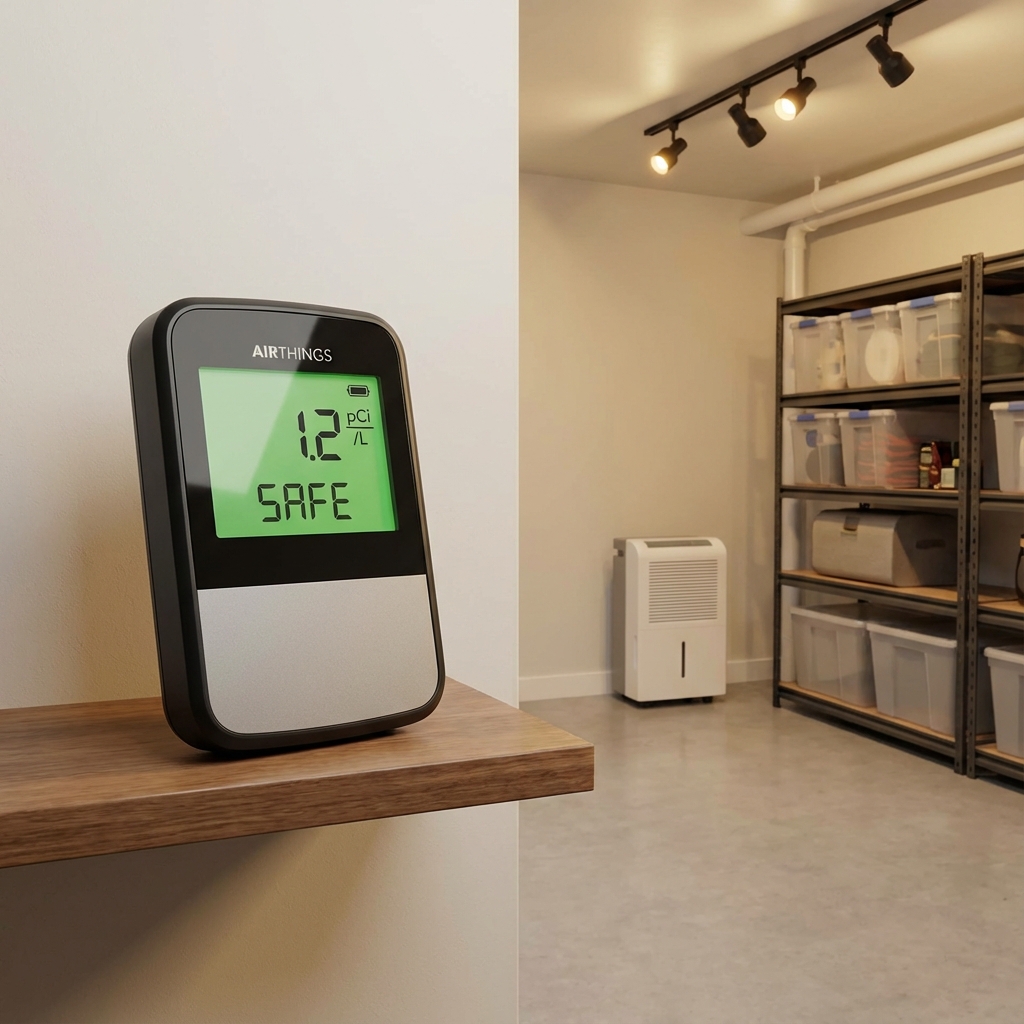
We utilize commercial-grade electronic Continuous Radon Monitors (CRMs) that record hour-by-hour radon concentrations, barometric pressure, temperature, relative humidity, and tilt/tamper sensors. If a window is opened to artificially dilute the air, our hourly graph detects the drop—giving you an accurate, tamper-evident report as soon as the 48-hour test concludes.
4. New York 48-Hour Closed-Building Testing Protocol
To comply with EPA real estate testing standards, short-term radon tests follow strict placement and house-condition rules:
Closed-House Conditions
- Exterior windows and doors kept closed (except normal entry/exit) 12 hours prior and during the 48-hour test
- Whole-house exhaust fans and window AC dampers closed
Lowest Livable Level Placement
- Placed in the lowest level suitable for occupancy (such as a finished or finishable basement)
- Positioned away from drafts, sump pits, direct sunlight, and high-humidity bathrooms
5. What If My Long Island Home Tests High for Radon?
The good news about radon is that it is one of the most straightforward environmental issues to fix permanently. An active Sub-Slab Depressurization (SSD) system uses a PVC extraction pipe sealed into the gravel bed beneath the basement slab and connected to a quiet, continuously running inline radon fan that vents soil gas safely above the roofline—before it can ever enter your living space.
Pair your radon evaluation with our Complete Long Island Home Inspection and Termite & WDI Inspection for total peace of mind before signing your purchase contract.